UK house prices are still rising, but only just. The average home cost £273,000 in August 2026, up 0.9% on a year earlier (HM Land Registry, 2026). Growth has slowed across most of the country, and prices are falling in London. Here's what the latest official figures show, and what they mean for buyers and sellers this winter.
Are house prices going up or down?
Up, but slowly. The 0.9% annual rise is down from 1.2% the month before (Office for National Statistics, 2026). On a seasonally adjusted basis, which smooths out the usual ups and downs of the year, UK prices actually fell by 0.2% between July and August (HM Land Registry, 2026).
Annual growth slowed in six of the nine English regions (HM Land Registry, 2026).
House prices by area
| Area | Average price | Change in a year |
|---|---|---|
| England | Average price£294,000 | Change in a year+0.4% |
| Wales | Average price£216,000 | Change in a year+3.1% |
| Scotland | Average price£198,000 | Change in a year+2.9% |
| Northern Ireland (Q2) | Average price£202,000 | Change in a year+9.2% |
In England, prices grew fastest in the North East (up 3.2%). London was the only region where prices fell, down 2.2%. London flats fell by 5.0%, while London houses went up. Flats make up half of all sales in London, so they pull the average down (HM Land Registry, 2026).
Which types of home are going up most?
| Type | Average price | Change in a year |
|---|---|---|
| Detached | Average price£443,846 | Change in a year+0.7% |
| Semi-detached | Average price£278,675 | Change in a year+2.1% |
| Terraced | Average price£232,505 | Change in a year+1.8% |
| Flat or maisonette | Average price£194,148 | Change in a year−1.6% |
What about rents?
Rents are rising much faster than house prices. The average UK private rent was £1,406 a month in September 2026, up 3.8% in a year. In England it was £1,466, in Wales £848 and in Scotland £1,011 (Office for National Statistics, 2026). Wondering whether to buy or keep renting? Read our guide to buying vs renting in 2026.
What it means for buyers and sellers
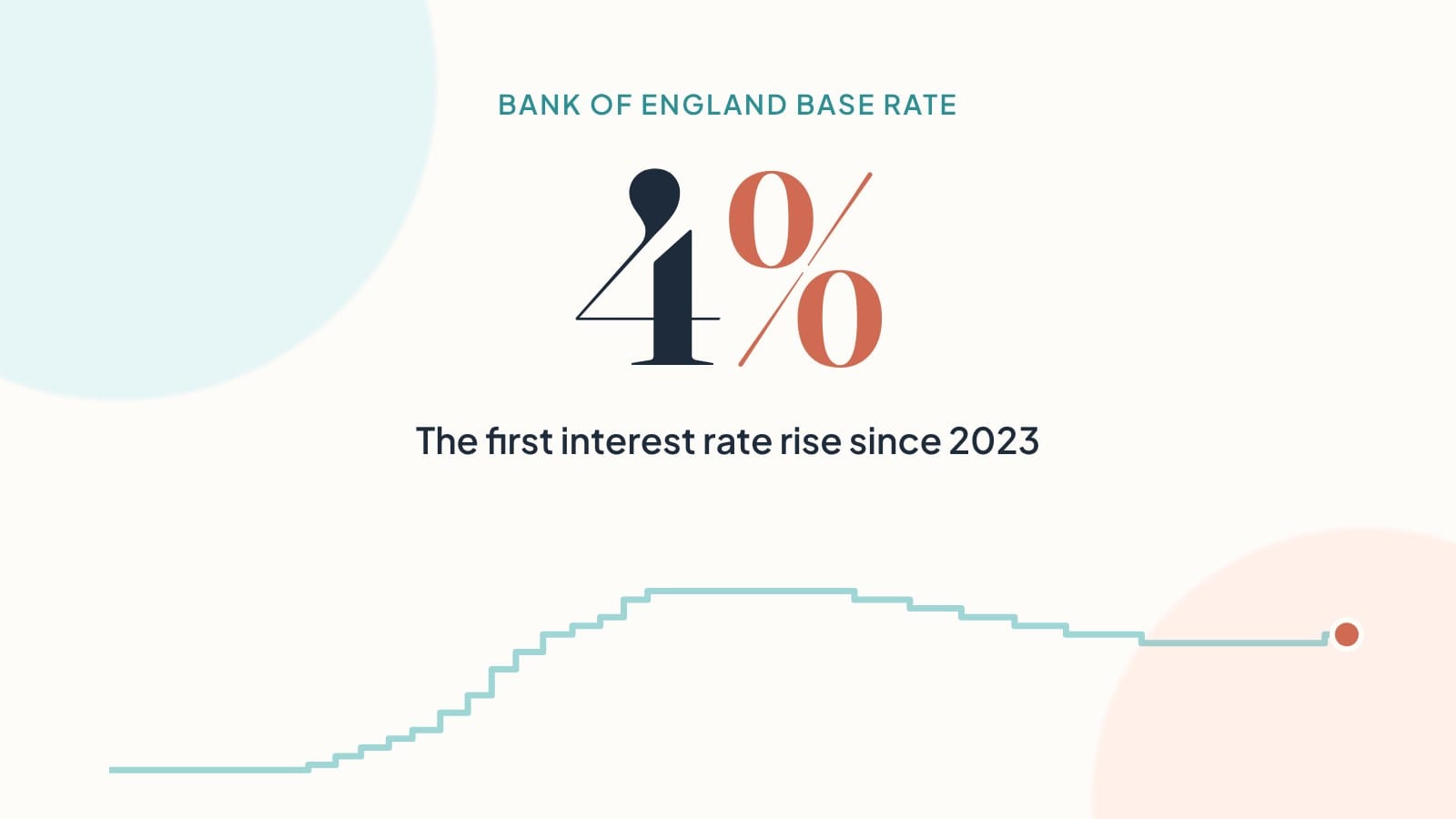
Buyers. Slow price growth gives you more room to negotiate, especially for flats and in London. But borrowing is getting more expensive. The Bank of England raised the base rate to 4% on 5 November 2026 (Bank of England, 2026). Read what the base rate rise means for you.
Sellers. Price your home realistically. Buyers can see what's sold nearby, so an overpriced home may sit on the market. Our guide on how much your house is worth explains how to check.
UK house prices: quick answers
What is the average house price in the UK?
£273,000 in August 2026 (HM Land Registry, 2026).
Are house prices falling?
Not across the UK as a whole. They rose 0.9% in a year, but fell 2.2% in London (HM Land Registry, 2026).
Where are house prices rising fastest?
Northern Ireland (up 9.2% in the year to April to June 2026). In England, the North East (up 3.2%) (HM Land Registry, 2026).
When are the next house price figures out?
The September 2026 figures are published on 18 November 2026 (HM Land Registry, 2026).
Whatever your next move, see how Planna can help at every stage of your home journey.
Figures are provisional and may be revised. This article is for general information and isn't financial advice.
References
Bank of England (2026) Bank Rate increased to 4% - November 2026 Monetary Policy Summary and Minutes. Available at: https://www.bankofengland.co.uk/monetary-policy-summary-and-minutes/2026/november-2026 (Accessed: 20 November 2026).
HM Land Registry (2026) UK House Price Index summary: August 2026. Available at: https://www.gov.uk/government/statistics/uk-house-price-index-for-august-2026/uk-house-price-index-summary-august-2026 (Accessed: 20 November 2026).
Office for National Statistics (2026) Private rent and house prices, UK: October 2026. Available at: https://www.ons.gov.uk/economy/inflationandpriceindices/bulletins/privaterentandhousepricesuk/october2026 (Accessed: 20 November 2026).